- Página de inicio /
- Libros /
- Education Books /
- School & Teaching books /
- Education Theory /
- Administration /
- Design Thinking for School Leaders: Five Role...
0 ratings


Nº de artículo:
43156566
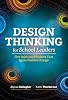
Design Thinking for School Leaders: Five Roles and Mindsets That Ignite Positive Change
Nº de artículo:
43156566
GTQ 202
Price Details
Excluding Shipping & Custom charges ( Shipping and custom charges will be calculated on checkout )
*All items will import from Estados Unidos
0 ratings
Escribe una opinión
En stock
 Importado de la tienda USA
QTY:
Haz tu pedido ahora y recíbelo por ahí Monday, Julio 27
Secured transaction
Ubuy works hard to protect your security and privacy. Our advanced payment security system ensures confidentiality by encrypting your information during transmission using AES (Advanced Encryption Standards) and SSL (Secure Socket Layer) protocols. Your payment details are 100% secure as we do not share your payment details with third party sellers.
Our Top Logistics Partners


Design Thinking for School Leaders explores the changing landscape of leadership and offers practical ways to reframe the role of school leader using Design Thinking, one step at a time.

Fast
Shipping

Free
Return*

Secure Packaging

100% Original Products

PCI DSS Compliance

ISO 27001 Certified


What Stands Out
Innovative Framework
Equips school leaders with a structured approach to fostering creativity and collaboration, enhancing their ability to implement transformative educational practices effectively.
Leadership Mindsets
Promotes essential mindsets that empower leaders to overcome challenges and inspire their teams, leading to a more engaged and motivated educational environment.
Practical Strategies
Offers actionable strategies that can be easily integrated into school settings, helping leaders to drive positive change and improve student outcomes consistently.
Detalles de producto
- A new perspective of seeing the world differently is desperately needed in schools and begins with school leadership
- Practical ways to reframe the role of school leader using Design Thinking, one step at a time
- Details five specific roles to help leaders identify opportunities for positively impacting students, teachers, districts, parents, and the community
- Provides examples of Design Thinking in action in schools across the country
- Guides school leaders to the forefront of the new design + education movement
- Aims to move traditional education into the modern world and drive the future of learning
| Publisher | ASCD |
| Publication date | May 23, 2018 |
| Language | English |
| Print length | 209 pages |
| ISBN-10 | 1416625941 |
| ISBN-13 | 978-1416625940 |
| Item Weight | 9.6 ounces (272.16 grams) |
| Dimensions | 5.9 x 0.6 x 8.9 inches (15 x 1.5 x 22.6 cm) |
Who Should Buy?

-
School Administrators
Ideal for principals and district leaders aiming to implement innovative strategies for effective educational leadership.
-
Educators Seeking Growth
Teachers looking to enhance their skills and adopt a design thinking approach to improve classroom experiences.
-
Change Agents
Individuals leading transformation initiatives in educational settings who require structured frameworks for implementing change.

-
Non-Educators
Individuals outside the education sector may find the content less applicable or relevant to their needs.
DESCRIPCIÓN DEL PRODUCTO
Design Thinking for School Leaders: Five Roles and Mindsets That Ignite Positive Change
¿Tienes alguna consulta? Chatea con nosotros
Preguntas y respuestas de los clientes
-
Pregunta:
What is the main focus of 'Design Thinking for School Leaders'?
Respuesta: The book 'Design Thinking for School Leaders' centers on harnessing the principles of design thinking to foster innovation in educational leadership. It outlines five key roles that leaders should adopt, which include facilitator, researcher, educator, advocate, and innovator. By embracing these roles, school leaders can effectively navigate challenges and stimulate a culture of collaboration, creativity, and continuous improvement within their schools. This approach is highly beneficial for addressing complex issues such as curriculum development, student engagement, and community involvement, ensuring that leaders can drive positive change in their educational environments. -
Pregunta:
How can design thinking improve school leadership?
Respuesta: Design thinking can enhance school leadership by encouraging leaders to approach problems from a user-centered perspective. This methodology emphasizes empathy, creativity, and iterative problem-solving, allowing leaders to engage students, teachers, and the community in meaningful ways. For instance, by utilizing design thinking, school leaders can gather feedback to refine educational programs or initiatives, ensuring they meet the needs and aspirations of their stakeholders. The practical use of these principles can lead to increased satisfaction among teachers and students, ultimately fostering a more effective learning environment. -
Pregunta:
Who is the target audience for this book?
Respuesta: 'Design Thinking for School Leaders' is specifically designed for current and aspiring school administrators, educational leaders, and policymakers. It provides insights that can be applied across different educational settings, from K-12 institutions to higher education. The content is geared toward those who seek to innovate and adapt their leadership practices to better meet the demands of 21st-century education. By adopting the strategies outlined in this book, leaders can create dynamic learning environments that promote engagement and enhance student outcomes. -
Pregunta:
What are the five roles of school leaders discussed in the book?
Respuesta: The five roles outlined in 'Design Thinking for School Leaders' are facilitator, researcher, educator, advocate, and innovator. Each role contributes uniquely to the leadership landscape; for instance, as a facilitator, leaders work to create inclusive environments that motivate collaboration among staff and students. As researchers, they investigate educational needs and emerging trends to make informed decisions. By embracing these roles, leaders can effectively champion positive change and foster an atmosphere that encourages creativity and innovation in educational practices. -
Pregunta:
How is empathy integrated into the design thinking process for school leaders?
Respuesta: Empathy is a cornerstone of the design thinking process as described in 'Design Thinking for School Leaders.' It requires leaders to actively listen to the needs and experiences of students and teachers, ensuring that their voices are central to any solutions developed. For example, empathy can guide a leader in redesigning a classroom environment to better support diverse learning styles. By engaging stakeholders through interviews or surveys, school leaders can cultivate an understanding of their unique challenges and aspirations, ultimately leading to more effective interventions. -
Pregunta:
Can design thinking principles be applied to curriculum development?
Respuesta: Yes, design thinking principles are highly applicable to curriculum development, as highlighted in 'Design Thinking for School Leaders.' By engaging educators and students in the design process, leaders can create curricula that are more relevant and impactful. For instance, utilizing brainstorming sessions and prototyping allows teachers to co-create lessons that address real-world problems, fostering deeper engagement among students. This collaborative approach not only enhances learning outcomes but also instills a sense of ownership among all participants in the educational process. -
Pregunta:
How does the book suggest measuring the impact of design thinking in schools?
Respuesta: 'Design Thinking for School Leaders' recommends several strategies for measuring the impact of design thinking initiatives. These include establishing clear objectives and key performance indicators (KPIs) to assess progress over time. Surveys and feedback forms can capture the experiences of students, teachers, and parents. Additionally, leaders are encouraged to reflect on both qualitative and quantitative data to evaluate the effectiveness of implemented changes. By regularly assessing these metrics, school leaders can make informed adjustments, ensuring continuous improvement and maximized positive outcomes for their educational communities. -
Pregunta:
What are some practical examples of design thinking in action within schools?
Respuesta: Practical examples of design thinking in action within schools include redesigning school spaces based on student feedback or developing programs that address specific behavioral issues. For instance, a school leader might organize workshops where students collaboratively explore issues they face, leading to initiatives like peer mentoring programs. Similarly, using iterative prototyping, a leader could pilot new teaching methodologies before full implementation, allowing for adjustments based on real-time feedback. Such strategies not only boost student and teacher engagement but also demonstrate the tangible benefits of design thinking in educational settings. -
Pregunta:
Why is innovation important in school leadership?
Respuesta: Innovation is crucial in school leadership as it enables leaders to adapt to the rapidly changing educational landscape. By adopting innovative practices, school leaders can address evolving student needs, integrate technology effectively, and promote a culture of lifelong learning. In 'Design Thinking for School Leaders,' innovation is framed as a proactive approach, helping schools to not only respond to challenges but also to anticipate future trends. For example, implementing blended learning models can enhance student engagement and success, showcasing how innovation drives positive educational outcomes. -
Pregunta:
Where can I buy 'Design Thinking for School Leaders' in Guatemala?
Respuesta: You can purchase 'Design Thinking for School Leaders: Five Roles and Mindsets That Ignite Positive Change' on Ubuy. Ubuy offers a wide selection of educational books, allowing you to easily find this title along with related resources to enhance your knowledge and leadership skills. Simply visit their website, search for the book, and proceed to check out for a seamless shopping experience. Ubuy's platform provides a user-friendly interface, making it simple to navigate and find what you need for your professional growth.
Administration Editorial Review
No se encontraron reseñas editoriales
Customer Reviews & Ratings
1 valoraciones de los clientes
-
5 estrella
100%
-
4 estrella
0%
-
3 estrella
0%
-
2 estrella
0%
-
1 estrella
0%
Revisar este producto
Comparte tus ideas con otros clientes
Platform Trust & Buyer Confidence

MT
Mohd
Verified buyer
“The product received very good packaging & safe…Thank You”
16 June 2026 · via Trustpilot
SJ
Shawati
Verified buyer
“Accurate delivery timing given”
16 June 2026 · via Trustpilot
YB
Youcef
Verified buyer
“Not madly expensive like I thought, and much quicker than promised.”
15 June 2026 · via Trustpilot
LM
Leila
Verified buyer
“Never dealt with Ubuy before, but everything worked out great. Seamless cross border purchasing and shipping. Thanks!”
6/7/2026 · via Trustpilot
KA
Kwame
Verified buyer
“The process was smooth, with clear communication and timelines. This was my 1st purchase and I am really impressed. I will definitely be coming back.”
12 June 2026 · via Trustpilot
Pago seguro
Global Delivery
Easy Returns
Genuine Products
Product Price History
Información importante
- Limitaciones: Para los productos enviados al extranjero, ten en cuenta que cualquier garantía del fabricante puede no ser válida; las opciones de servicio del fabricante pueden no estar disponibles; los manuales del producto, las instrucciones y las advertencias de seguridad pueden no estar en los idiomas del país de destino; los productos (y los materiales que los acompañan) pueden no estar diseñados de acuerdo con las normas, especificaciones y requisitos de etiquetado del país de destino; y los productos pueden no ajustarse al voltaje del país de destino y a otras normas eléctricas (lo que requiere el uso de un adaptador o convertidor, si procede). El destinatario es responsable de asegurarse de que el producto puede ser importado legalmente al país de destino. Cuando hagas un pedido a Ubuy o a sus filiales, el destinatario es el importador registrado y debe cumplir todas las leyes y normativas del país de destino.
- No todos los productos que aparecen en Ubuy están a la venta, ya que Ubuy es un motor de búsqueda a nivel mundial. Los productos están sujetos a las normas de exportación/comercio.
GTQ 202
Haz tu pedido ahora y recíbelo por ahí Monday, Julio 27
This item is not restrict in my country.(Please click on above link if this item is not restrict in your country, So our team will review and allow.)
QTY:
Secured transaction
PCI DSS compliant and ISO 27001:2022 certified, with encrypted payments and full buyer protection on every order.
Our Top Logistics Partners
Fastest cross-border delivery
características y beneficios
- Approaching work with a designer's perspective is needed in schools & begins with school leadership
- Design-inspired leadership can ignite positive change using design & innovation principles
- Viewing the world through a more empathetic lens is a critical first step to becoming a design-inspired leader
- Specific roles offered to help identify opportunities for positively impacting students, teachers, districts, parents & the community
- Full of examples of Design Thinking in action in schools across the country
- Can help guide your school to the forefront of the new design + education movement.
Ubuy Assurance
Experience worry-free shopping with 100% original products, PCI DSS-compliant payment security, ISO 27001-certified data protection, the fastest cross-border delivery, free returns *, and secure packaging on every order.